Fixing a Tripped Circuit Breaker, Fast
Flicking a switch back on twice in one evening gets old fast, and it usually means the board is trying to tell you something.
Ring (02) 9538 7444 and tell us what it's doing. We'll say straight away whether it can wait or not.
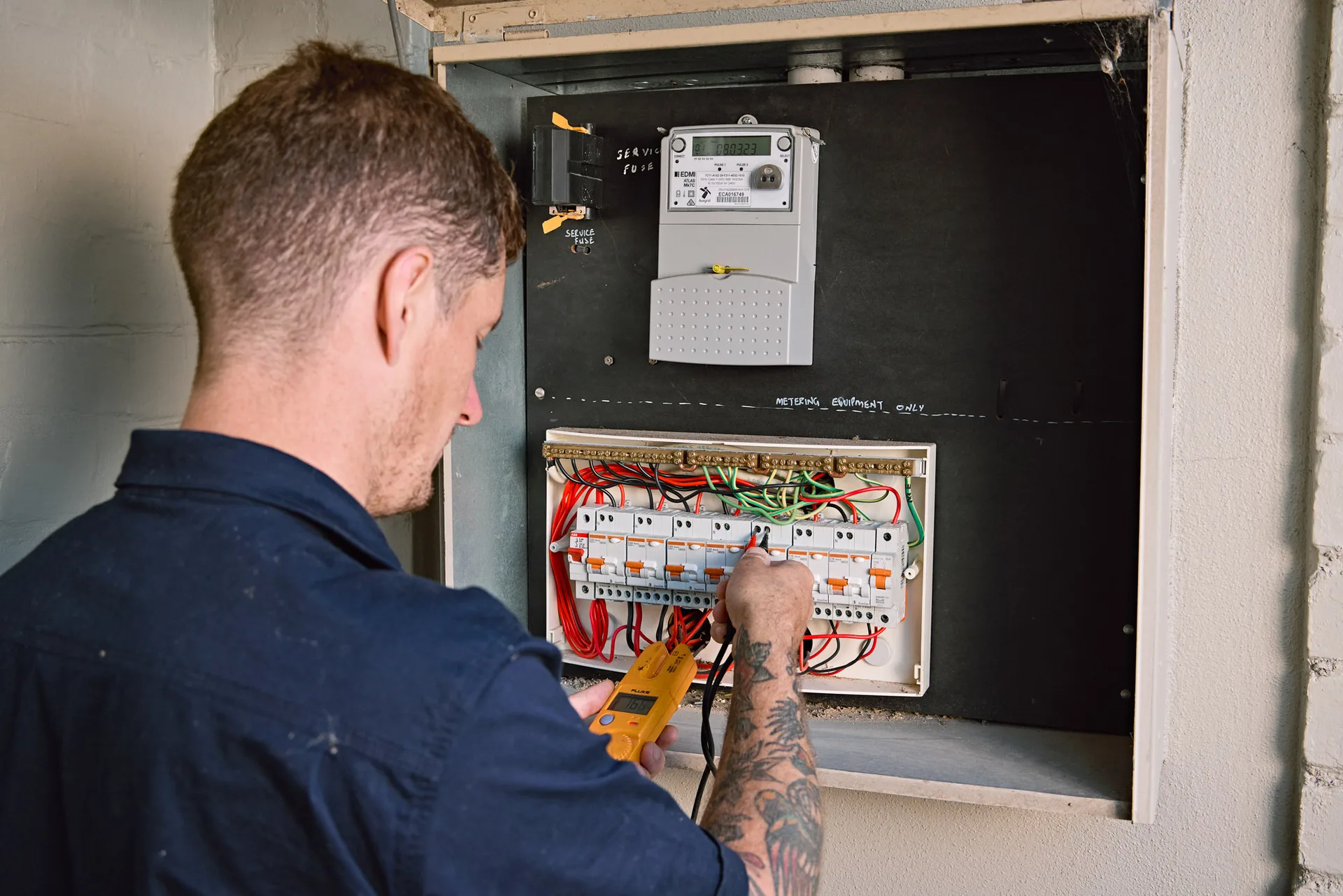
Why Your Breaker Is Tripping
Think of a breaker as a sensor with a switch attached. It measures current constantly, and cuts the circuit the moment that current crosses a set limit.
Nothing about that is broken. It's the mechanism doing exactly the job it was built for.
The upgrade over an old fuse is that a breaker resets by hand instead of needing replacement wire every time.
Context matters here. A trip during an unusual spike, like several heaters running at once, is normal.
A trip during an ordinary afternoon with nothing unusual plugged in points somewhere else entirely.
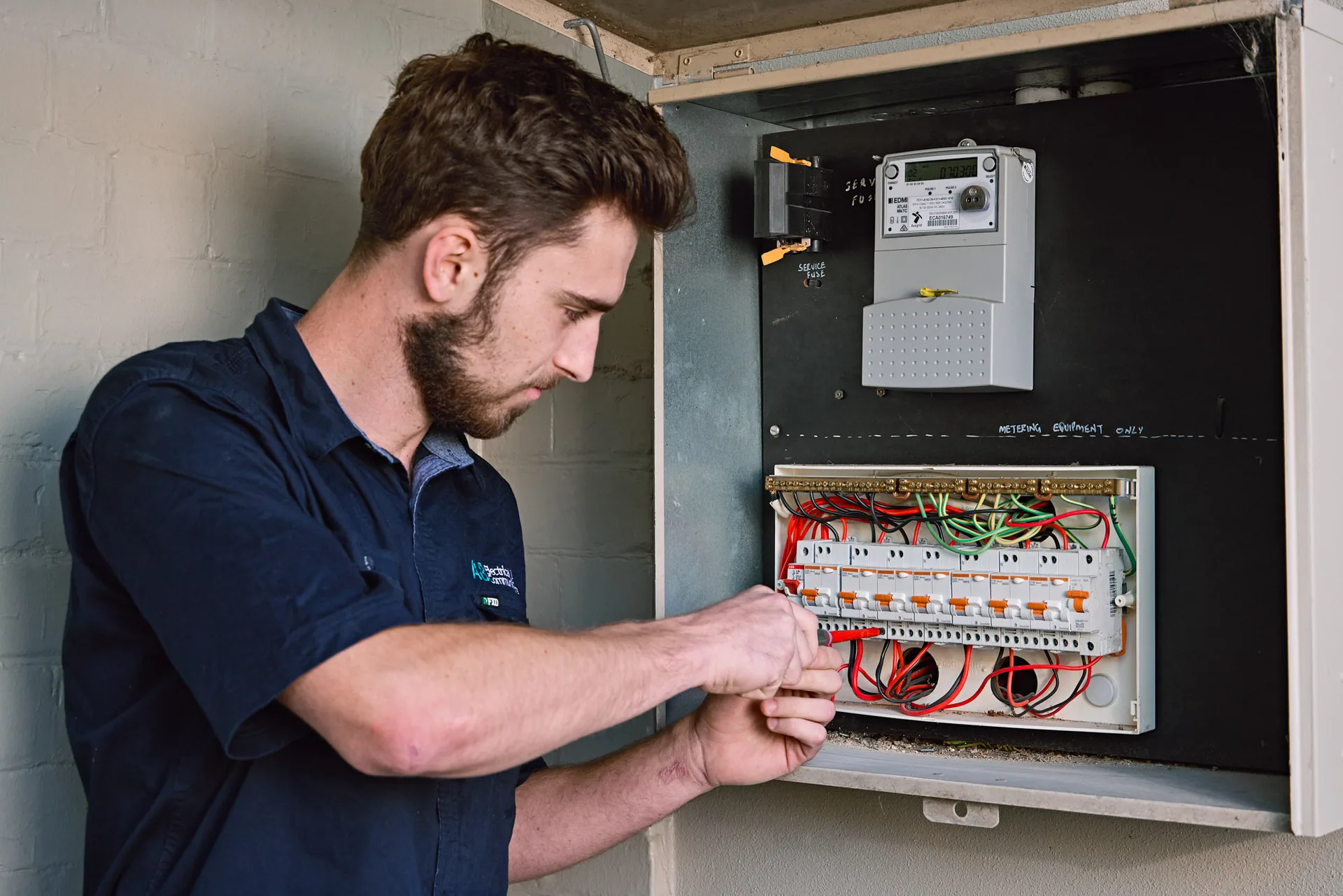
The Most Likely Causes
Here's what usually sits behind a breaker that keeps letting go, from most common to least.
Knowing which one applies to you often starts with when it trips, not just how often.
- Circuit overload: a kettle, heater and hair dryer all running off the one circuit, pushing past what it can safely carry.
- A short circuit: two conductors touching that were never meant to meet, usually from ageing insulation.
- An earth fault: current leaking to earth through a damaged appliance or cable.
- A faulty appliance: a fridge, heater or old power tool with an internal fault, pulling more current than it's rated for.
- A worn breaker: the mechanism itself ageing and tripping below its rated threshold.
- Water ingress: dampness reaching a switch, point or outdoor fitting.
Some of these are quick to sort. Others point to a board that's simply reached the end of what it can carry, which is worth knowing before you book a repeat callout.
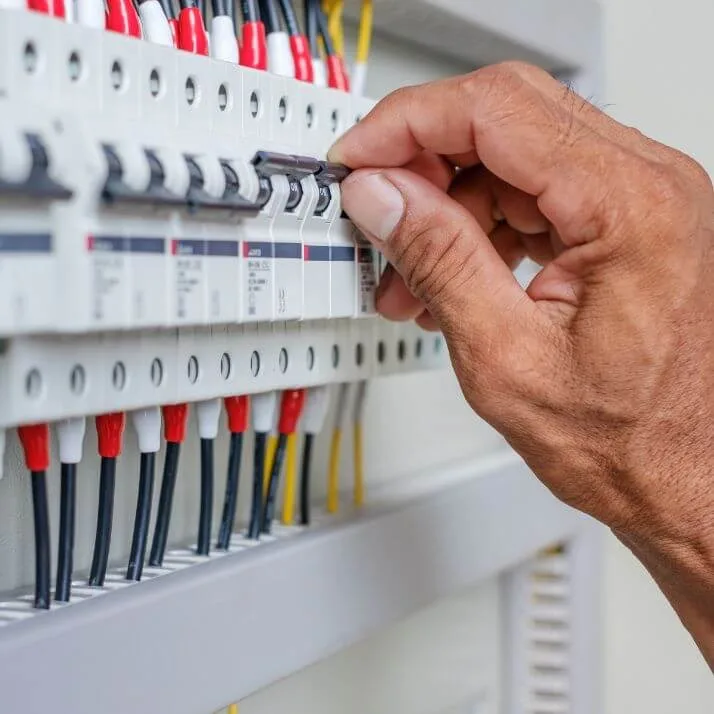
When a Tripped Circuit Breaker Is Urgent
Most trips are a mechanical safeguard working exactly as intended.
A single trip after switching on a heater or running the oven and the kettle together is rarely cause for concern.
Treat it as urgent if the breaker won't stay reset at all, if you smell burning, or if the switch itself feels hot to touch.
If it drops again the moment you switch it back on, with nothing plugged in anywhere on that circuit, the problem is in the wiring itself rather than an appliance. That deserves a same-visit look.
A board that refuses to hold the switch up for more than a second or two fits the same category. That's a fault to trace, not a load to manage.
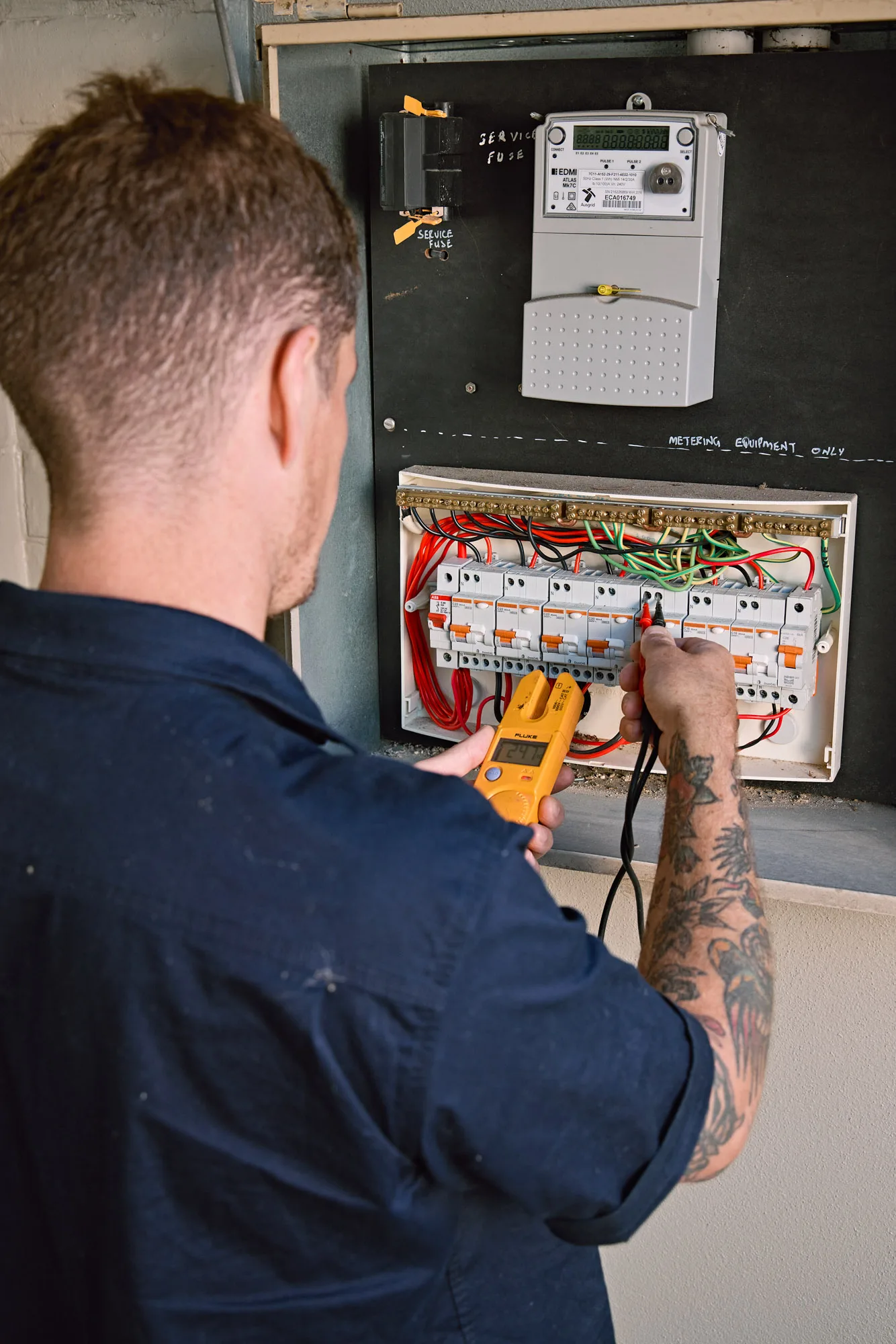
What To Do Right Now
- Unplug everything on that circuit before resetting the breaker, so you can test it with a clean slate.
- Reset the breaker once. If it holds, plug items back in gradually so you can spot the culprit.
- Call (02) 9538 7444 if it trips again immediately, or if you can't tell which appliance is behind it.
How We Fix It, Step by Step
We isolate each circuit in turn rather than guessing which one is the problem.
That process rules things out methodically instead of chasing the first thing that looks suspicious.
Testing tells us whether the fault sits with a specific appliance, a section of wiring, or the breaker itself.
From there we repair or replace to AS/NZS 3000 standard, fit a safety switch if the board doesn't already carry one, and confirm the fix holds under normal load before we leave.
Notifiable repairs come with a Certificate of Compliance, giving you a paper trail if you ever need it.
How to Stop It Happening Again
An occasional trip is normal wear on the system. Stopping it becoming a weekly event usually comes down to a few things.
- Move heavy appliances onto separate circuits so no single run carries the whole kitchen.
- Fit safety switches on every circuit if your board is missing them.
- Book a switchboard upgrade where the board is original and can't take modern loads.
- Have a fault traced properly rather than resetting the same breaker week after week.
- Get outdoor points checked if the trips line up with wet weather.
- Ask about a board reassessment if you've added a home office, an EV charger or extra appliances since it was last looked at.
Other Faults We Chase Down
A breaker that trips often runs alongside a blown fuse on mixed-age boards carrying both fuse and breaker circuits.
If lights dim or flicker in the same room, that's usually the same overloaded run and our flickering lights page covers it in more detail.
Where the board itself hums or buzzes as it trips, take a look at our noisy breaker box page next.
We handle this fault across Normanhurst, Pennant Hills, Waitara and Beecroft on a normal week's run.

Get in Touch Today Before It Gets Worse
A breaker that keeps tripping isn't something to reset and forget.
Ring (02) 9538 7444 for a fixed written quote and a clear explanation of what's going on, often same or next day.
Common questions
Tripped Circuit Breaker FAQs
Real answers to the questions we hear most about a tripping breaker. Anything else on your mind, ring (02) 9538 7444 and ask.
Can I fix a tripped circuit breaker myself?
Flipping the switch back on is fine to try once. Anything beyond that is licensed work under NSW law, and doing it yourself can void your home insurance.
Does insurance care about non-compliant repairs?
Yes. An insurer can knock back a claim traced to unlicensed work, which is exactly why every job we do gets a Certificate of Compliance where notifiable.
How do you find the fault behind a tripping breaker?
We isolate circuits one at a time to narrow down which one is at fault, then test what's actually causing the trip before touching anything.
Should I turn off the mains if a breaker keeps tripping?
Only if you can't identify which circuit is causing it. Otherwise, switching off just that one circuit is enough while you wait for us.
Will the repair come with a certificate?
Yes, on any notifiable work. We lodge it with NSW Fair Trading so there's a record of the fault and what was done to fix it.
How fast can you get to Normanhurst?
Often same or next day for a standard booking, and faster again for a genuine emergency. Call (02) 9538 7444 and we'll give you a straight answer.